
By Akshay Kumar Vennu

Can a Startup Succeed Where Google and Amazon Have Struggled?
For more than a decade, some of the world’s largest technology companies have chased one ambitious dream: autonomous drone delivery.
Companies including Google, Amazon, UPS, Zipline, Wing, and many others have collectively invested billions of dollars into making aerial logistics a part of everyday life. The vision is compelling—a future where medicines, groceries, food, and essential supplies can reach customers within minutes through fleets of autonomous aircraft.
Despite enormous investments, however, the industry has faced one persistent challenge.
The economics simply haven’t worked at scale.
While autonomous flight technology has advanced dramatically, the cost of operating delivery drones has remained too high for widespread commercial adoption.
Now, an Indian startup believes it has found a different answer.
Instead of trying to build smarter drones using more artificial intelligence, it is redesigning the aircraft itself.
That startup is Airbound.
Founded by just 20-year-old Naman Pushp, Airbound is building an entirely new generation of lightweight autonomous aircraft designed to make drone logistics economically viable.
Rather than competing with Google and Amazon on software, Airbound is betting on something much simpler—and perhaps much harder.
Physics.

Meet Airbound
Airbound is a Bengaluru-based aerospace startup focused on autonomous logistics.
The company develops ultra-lightweight Vertical Take-Off and Landing (VTOL) aircraft capable of transporting medical supplies, commercial goods, and other lightweight cargo with dramatically lower operating costs than traditional delivery drones.
Its mission is straightforward:
Make autonomous delivery affordable enough to become part of everyday infrastructure.
Unlike many drone startups that primarily focus on artificial intelligence, computer vision, or navigation software, Airbound places aircraft engineering at the centre of its innovation.
The company believes that if the aircraft itself becomes significantly lighter and more efficient, everything else becomes easier.
Lower energy consumption.
Longer range.
Lower maintenance.
Lower delivery costs.
Greater scalability.
It is a surprisingly simple idea—but one that challenges years of industry assumptions.

The Story Begins During COVID-19
Every startup has an origin story.
Airbound’s begins during the COVID-19 pandemic.
At the time, Naman Pushp wanted to build a delivery drone.
Like many young engineers, he was fascinated by aviation and robotics.
There was only one problem.
He didn’t have access to expensive engineering equipment.
Most drone builders relied on 3D printers.
Naman couldn’t afford one.
Instead of giving up, he improvised.
He printed engineering drawings using an ordinary paper printer.
Those paper blueprints were glued onto foam sheets.
Every aircraft component was carefully cut by hand.
Hours were spent sanding, shaping, and assembling the structure manually.
According to interviews, each prototype required nearly twenty hours of painstaking work.
What started as a homemade foam aircraft gradually evolved into the earliest version of what would later become Airbound.
Sometimes innovation doesn’t begin inside billion-dollar laboratories.
Sometimes it starts with paper, foam, glue, and determination.
A Childhood Built Around Engineering
Naman’s interest in engineering began long before Airbound.
While growing up in Malaysia, he built simple robots and explored electronics from a young age.
After returning to India, he participated in robotics competitions, continuously experimenting with mechanical systems and autonomous machines.
These early experiences shaped the engineering mindset that would later influence Airbound.
Rather than seeing drones as gadgets, he viewed them as aircraft.
That distinction would eventually define the company’s philosophy.
Turning Down Carnegie Mellon University
For many students interested in engineering, admission to Carnegie Mellon University represents a dream achievement.
The university is globally recognised for excellence in robotics, computer science, engineering, and artificial intelligence.
Receiving an opportunity to study there is considered a significant milestone.
Yet Naman Pushp made an unusual decision.
Instead of attending Carnegie Mellon University, he chose to pursue Airbound full-time.
It was a high-risk decision.
Most founders begin startups after university.
Naman decided to build one instead of going.
His reasoning was simple.
The opportunity to transform drone logistics felt too important to delay.
Understanding the Drone Delivery Problem
To appreciate Airbound’s approach, it’s important to understand why drone delivery has proven so difficult.
The concept appears simple.
A customer places an order.
A drone flies directly to the destination.
The package arrives within minutes.
In reality, the economics become incredibly complex.
Every additional kilogram of aircraft weight increases:
- Battery requirements
- Power consumption
- Structural complexity
- Manufacturing costs
- Maintenance expenses
- Charging time
- Operating costs
As aircraft become heavier, they require larger batteries.
Larger batteries increase weight.
More weight requires stronger motors.
Stronger motors consume more electricity.
That, in turn, requires even larger batteries.
Engineers often describe this as a vicious cycle.
Simply adding more technology rarely solves the problem.
Google Wing and Amazon Prime Air
Several major technology companies have spent years trying to solve autonomous delivery.
Google Wing
Google’s drone delivery division, Wing, has conducted commercial deliveries in countries including Australia and the United States.
Wing has successfully completed hundreds of thousands of deliveries ranging from medicines to food and household items.
Its aircraft use sophisticated autonomous navigation systems and advanced fleet management software.
Despite impressive technological achievements, expanding economically remains a complex challenge involving infrastructure, regulations, aircraft performance, and operational costs.
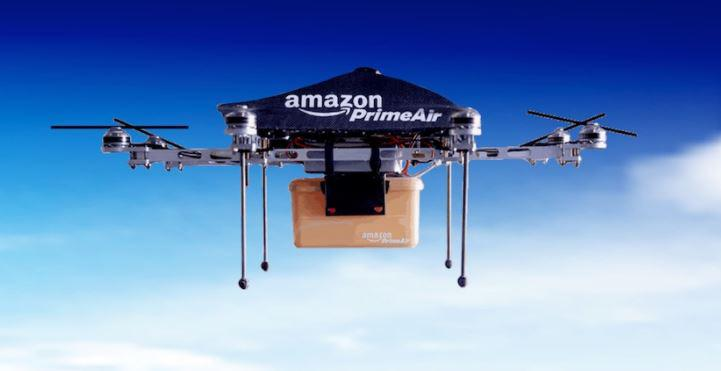
Amazon Prime Air
Amazon has pursued autonomous delivery for well over a decade.
Prime Air aims to deliver customer packages within approximately thirty minutes using autonomous drones.
Amazon has invested enormous resources into aircraft development, navigation systems, logistics software, and regulatory approvals.
While progress continues, scaling drone delivery economically across millions of deliveries remains one of the industry’s greatest engineering challenges.

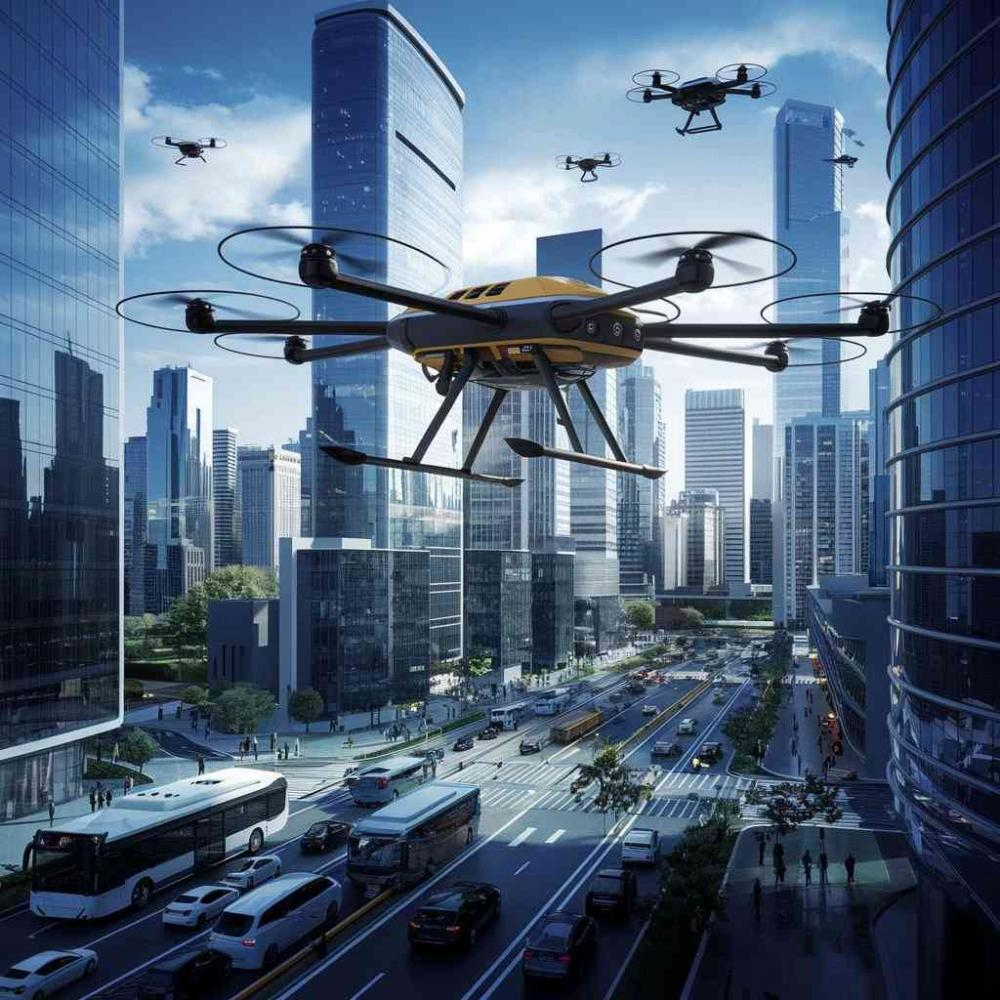
Billions Have Been Invested
Drone logistics has attracted investment from some of the world’s largest companies and investors.
Across the global industry, billions of dollars have gone into:
- Aircraft development
- AI systems
- Navigation software
- Computer vision
- Battery research
- Air traffic management
- Flight safety
- Logistics infrastructure
The technology works.
The challenge is making it profitable.
That is precisely the problem Airbound wants to solve.
Airbound’s Different Philosophy
Instead of asking,
“How can drones become smarter?”
Airbound asks,
“Why are drones so heavy?”
That small shift changes everything.
The company believes aircraft weight—not artificial intelligence—is the biggest obstacle preventing autonomous logistics from scaling economically.
According to Airbound, reducing aircraft weight dramatically improves:
- Flight efficiency
- Battery utilisation
- Payload efficiency
- Energy consumption
- Manufacturing costs
- Operating economics
Rather than building a flying computer, Airbound wants to build an exceptionally efficient aircraft.
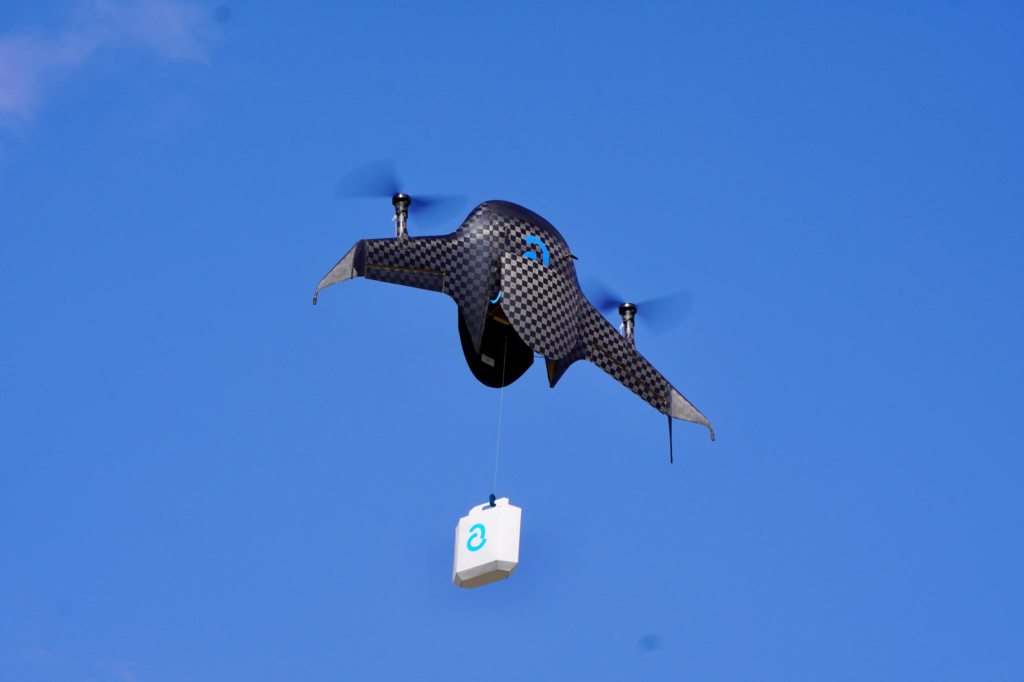
The TRT Aircraft
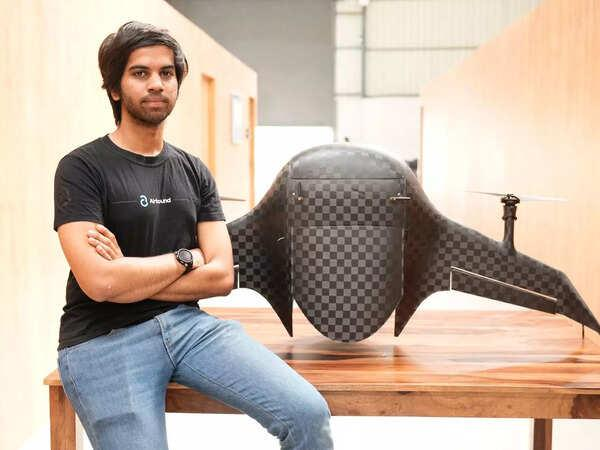
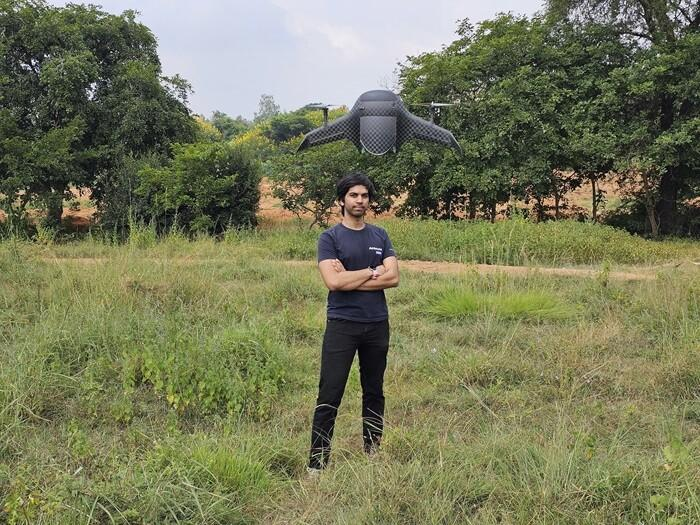
Airbound’s flagship aircraft is called the TRT.
It uses a blended-wing “tailsitter” configuration.
Unlike conventional quadcopters, which rely entirely on rotors throughout the flight, TRT combines two different flight modes.
During take-off and landing, it behaves like a helicopter.
Once airborne, it transitions into fixed-wing flight.
This provides several advantages.
Vertical Take-Off
The aircraft can operate without traditional runways.
This makes deployment possible in urban environments.
Hospitals.
Warehouses.
Distribution centres.
Remote villages.
Fixed-Wing Efficiency
Once cruising, the aircraft flies like an aeroplane.
Fixed-wing aircraft generate lift more efficiently than quadcopters.
That means:
- Less power consumption
- Longer range
- Better endurance
- Higher efficiency
Lightweight Design
According to company information, TRT weighs approximately 1.5 kilograms.
Despite its low weight, it is designed to transport meaningful payloads while maintaining efficient flight characteristics.
Carbon-fibre construction helps reduce structural weight without sacrificing strength.
Why Weight Matters More Than AI
Artificial intelligence can certainly improve autonomous navigation.
It can avoid obstacles.
Optimise routes.
Detect landing zones.
Manage fleets.
But AI cannot overcome poor aircraft physics.
Every unnecessary gram increases operating costs.
Airbound argues that the greatest opportunity lies in reducing aircraft mass before adding additional software complexity.
Their philosophy can be summarised in one sentence:
Better aircraft create better economics.
The Economics of Drone Delivery
Perhaps the most ambitious claim made by Airbound concerns delivery costs.
The company has publicly discussed aircraft capable of operating at approximately ₹0.10 per kilometre under its design assumptions.
Its long-term vision extends even further.
Founder Naman Pushp has spoken about eventually reducing delivery costs to around ₹1 per delivery using fleets of extremely lightweight autonomous aircraft.
If achieved, those economics could dramatically expand the commercial viability of autonomous logistics.
While these figures represent company goals and projections, they illustrate the scale of ambition driving Airbound’s engineering strategy.
Medical Logistics: Moving Beyond Prototypes
Many drone startups demonstrate impressive prototypes.
Far fewer deploy technology in real operational environments.
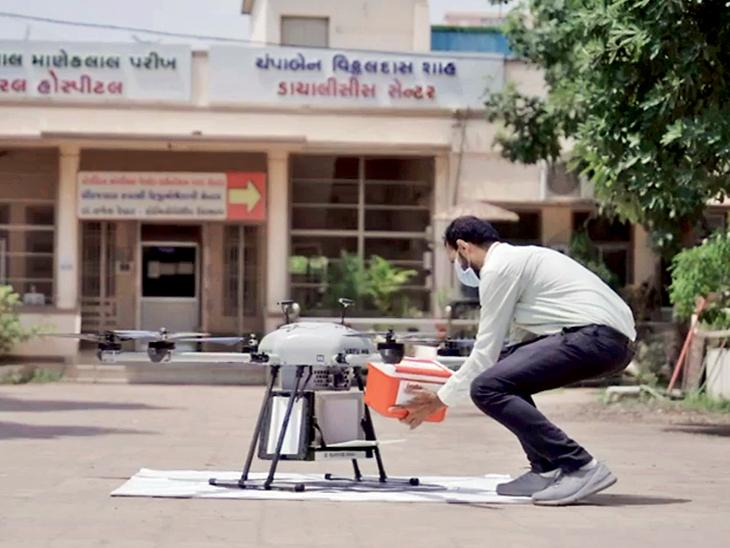
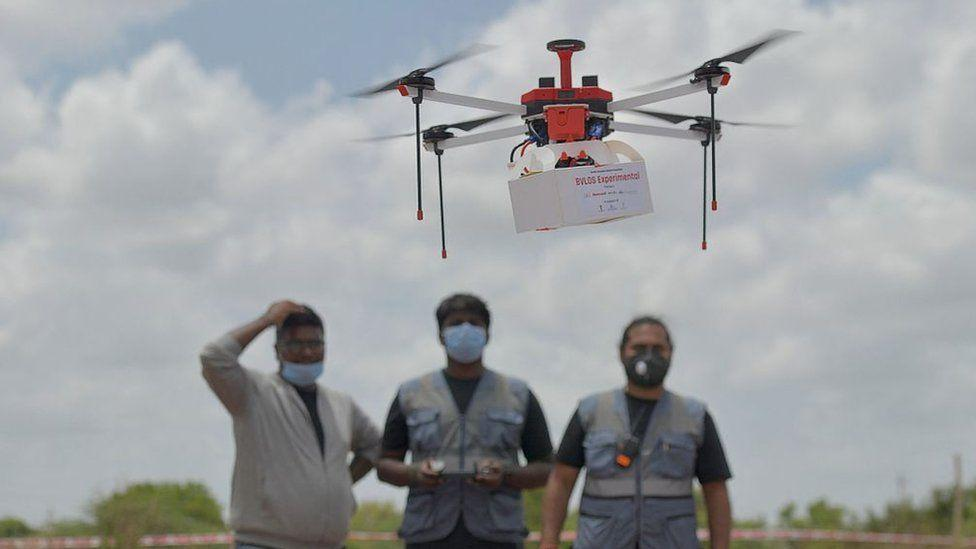
Airbound has already completed medical logistics trials.
Working with Narayana Health in Bengaluru, the company tested autonomous transport of diagnostic samples between healthcare facilities.
The results were notable.
Operational Highlights
- More than 700 successful flights
- 54 consecutive days of operation
- Zero failed deliveries
- Up to 40 medical samples transported per flight
- Flight times reduced to approximately 10 minutes
Medical logistics provides an ideal testing environment.
Samples are lightweight.
Speed matters.
Road traffic can cause delays.
Autonomous aircraft offer a practical alternative.
These trials demonstrated that Airbound’s technology could operate reliably outside laboratory conditions.
Andhra Pradesh Partnership
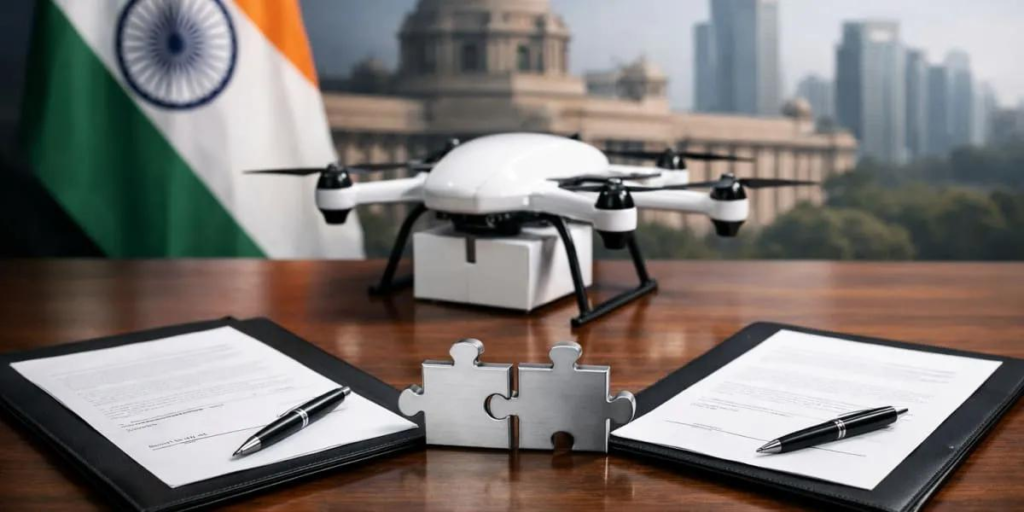
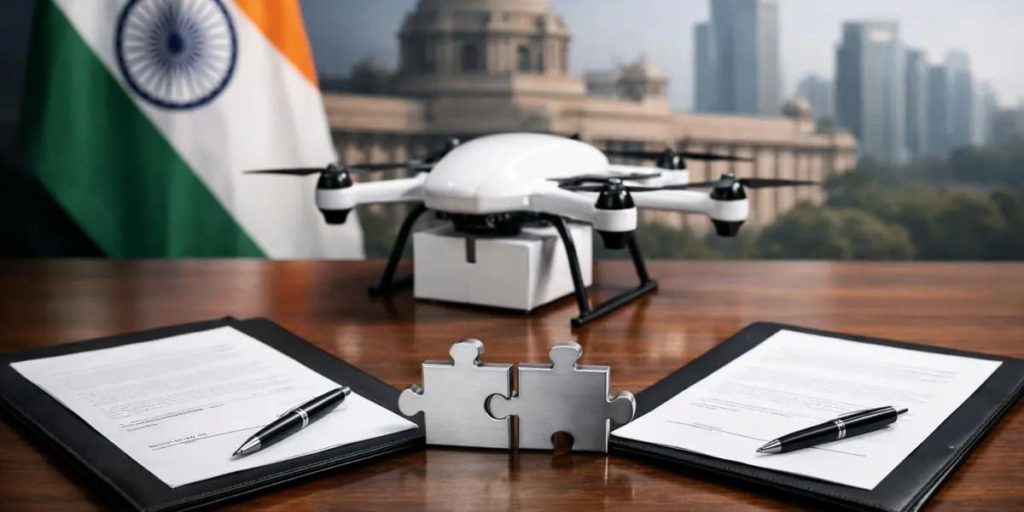
In June 2026, Airbound signed a Memorandum of Understanding (MoU) with the Andhra Pradesh Drone Corporation (APDC).
The collaboration focuses on creating dedicated drone corridors connecting:
- Amaravati
- Vijayawada
- Guntur
The long-term vision is ambitious.
The proposed network could eventually support as many as 10,000 drone flights per day, making it one of the world’s largest commercial drone logistics ecosystems if fully realised.
Government partnerships like this are significant because large-scale drone operations require coordinated infrastructure, airspace management, and regulatory support.
Funding the Vision
Building aerospace hardware requires substantial investment.
Airbound has raised more than US$8.65 million in seed funding.
The funding round was led by Lachy Groom, with participation from:
- Lightspeed Venture Partners
- Humba Ventures
The investment reflects growing confidence in Airbound’s approach to lightweight aircraft and autonomous logistics.
A Team with Deep Engineering Experience
Although Airbound is a young company, it has attracted engineers with experience at globally recognised organisations including:
- SpaceX
- Tesla
- Anduril
Experience from aerospace, advanced manufacturing, defence technology, and electric vehicles contributes to Airbound’s aircraft development efforts.
Why Lightweight Aircraft Could Change Everything
For years, discussions around drone delivery have focused on software.
Artificial intelligence.
Autonomous navigation.
Computer vision.
Machine learning.
Airbound shifts attention toward something more fundamental.
Aircraft efficiency.
History shows that transportation revolutions often come from better engineering rather than simply better software.
More efficient engines transformed aviation.
Lighter materials transformed automobiles.
Improved battery technology accelerated electric vehicles.
Airbound believes drone logistics may follow a similar pattern.
Looking Ahead
Autonomous logistics is still in its early stages.
Regulations continue evolving.
Infrastructure is expanding.
Battery technology keeps improving.
Aircraft designs continue to mature.
Whether Airbound ultimately reshapes the industry remains to be seen.
However, the company has already achieved milestones that many startups never reach:
- Real-world commercial testing
- Successful healthcare deployments
- Government partnerships
- Multi-million-dollar funding
- International investor backing
For a company founded by a teenager during the pandemic, that progress is remarkable.
Quick Facts
| Category | Details |
| Company | Airbound |
| Founder | Naman Pushp |
| Founded | 2020 |
| Headquarters | Bengaluru, India |
| Industry | Aerospace & Autonomous Logistics |
| Focus | Lightweight VTOL Aircraft & Drone Delivery |
| Aircraft | TRT |
| Weight | Approximately 1.5 kg |
| Seed Funding | US$8.65M+ |
| Major Investor | Lachy Groom |
| Government Partnership | Andhra Pradesh Drone Corporation |
| Healthcare Partner | Narayana Health |
Frequently Asked Questions (FAQ)
Who founded Airbound?
Airbound was founded by Naman Pushp, an Indian entrepreneur who started the company in 2020 while still a teenager.
What does Airbound build?
Airbound develops lightweight autonomous VTOL aircraft designed for commercial drone delivery and medical logistics.
Where is Airbound based?
The company is headquartered in Bengaluru, Karnataka, India.
What makes Airbound different?
Instead of focusing primarily on artificial intelligence, Airbound focuses on reducing aircraft weight to improve delivery economics.
Has Airbound completed real deliveries?
Yes. The company has completed medical logistics trials with Narayana Health involving over 700 successful flights.
How much funding has Airbound raised?
Airbound has announced more than US$8.65 million in seed funding.
Official Links
Airbound Official Website
https://www.airbound.co
Airbound LinkedIn
https://www.linkedin.com/company/airbound
Naman Pushp LinkedIn
https://www.linkedin.com/in/naman-pushp/
Andhra Pradesh Drone Corporation (APDC)
https://apdronecorp.ap.gov.in
Narayana Health
https://www.narayanahealth.org
References
The information in this article is based on publicly available sources, including:
- Airbound Official Website
- Airbound LinkedIn announcements
- Naman Pushp LinkedIn profile and public posts
- Andhra Pradesh Drone Corporation (APDC) announcements
- Narayana Health public information
- Fortune India coverage
- Forbes India articles
- NDTV Profit reports
- Startup funding announcements
- Public interviews featuring Naman Pushp
- Company presentations and official press releases
Final Thoughts
Airbound’s journey is more than the story of another drone startup. It is a story about questioning long-held assumptions in an industry dominated by some of the world’s biggest technology companies.
While many competitors concentrated on making drones smarter through increasingly sophisticated software and artificial intelligence, Airbound looked at the aircraft itself and asked a more fundamental engineering question: What if the biggest obstacle wasn’t intelligence, but weight?
That perspective has shaped everything the company has built—from its lightweight TRT aircraft to its focus on efficient aerodynamics, lower operating costs, and practical commercial deployments. Real-world medical logistics trials, government partnerships, and significant investor backing suggest that this philosophy is attracting serious attention.
Whether Airbound ultimately transforms global logistics will depend on continued technological progress, regulatory support, and the ability to scale economically. Those challenges remain substantial. But the company has already demonstrated that innovation does not always come from the largest organisations with the biggest budgets. Sometimes it begins with a young founder, a paper prototype, and a willingness to rethink the problem from first principles.
If Airbound succeeds, its biggest contribution may not simply be faster deliveries—it may be proving that the future of autonomous aviation depends as much on physics as it does on software.
If you enjoyed reading this in-depth story, share it with friends, entrepreneurs, aerospace enthusiasts, engineers, and anyone fascinated by Indian innovation. Every share helps more people discover the next generation of startups building the future of technology.


hi